Wednesday, December 15, 2021

The Paris Tesla Taxi Crash and why crash investigations are broken

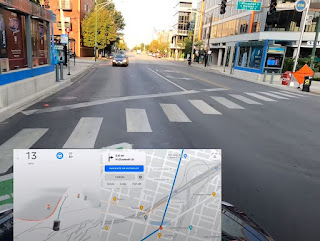
The tragic Tesla Paris crash of December 2021 highlights a completely dysfunctional vehicle defect investigation process. This story is well done, but highlights the usual broken investigation narrative (not fault of reporters):

The Paris government says: "no indication" of a "technical fault"
Well, did they look at software as a potential cause? Almost certainly not. Does Tesla follow international software safety standards (e.g., ISO26262)? Probably not. So it is a least possible this is a software defect.

What kind of software defect you ask? Well what if a software defect misreports the position of the accelerator pedal? What if there is a botched redundancy pattern in electronic controls? What if flaky code turns on AP? Mistakes like this are in other production vehicles.

Well, NHTSA exonerated 200+ Teslas earlier this year, right? Read the report. NHTSA DID NOT CONSIDER SOFTWARE DEFECTS at all in their investigation. If you don't even look, you won't find it. Read it for yourself!


In fact, there is a multi-decade pattern of NHTSA ignoring potential software defects in investigations unless they are readily reproduced. Instead, if it isn't readily reproduced, it must be the human driver. Scholarly paper on this history here.


We still don't know what happened here. But if it is a software problem across multiple vehicles, we're not going to fix it by ignoring it. Historically, the industry and NHTSA blame the driver to avoid having to deal with software safety.

I hope the French can do better here.

I hear so often "no other cars have that type of defect," or "it's not possible software is that bad." That's why I compiled this list of 100+ dangerous software defects that have resulted in recalls (i.e., the ones companies actually fixed): https://betterembsw.blogspot.com/p/potentially-deadly-automotive-software.html

(For those who aren't software safety experts, saying "we tested a car for a few miles and the accelerator worked fine, so no software error in Teslas" is the same as saying "your phone software crashed that one time but you can't make it happen again, so it can't be true.")

Friday, December 3, 2021

Automated Vehicle Regulatory Launch Page

 I've worked on a number of pieces that are relevant to automated/autonomous vehicle (AV) regulations lately. Here is a resource page to organize the material all in one place.

Stack of books

A quick note on standards:
  • SAE J3018 is relevant to public road testing in which a human driver ensures safety
    • Important: it is about driver capability, not automation capability
  • When there is no human driver continuously monitoring safety, then automated vehicle technical standards become relevant: ISO 26262, ISO 21448, ANSI/UL 4600


Saturday, November 27, 2021

Regulating Automated Vehicles with Human Drivers

Summary 

Regulatory oversight of automated vehicle operation on public roads is being gamed by the vehicle automation industry via two approaches: (1) promoting SAE J3016, which is explicitly not a safety standard, as the basis for safety regulation, and (2) using the "Level 2 loophole" to deploy autonomous test platforms while evading regulatory oversight. Regulators are coming to understand they need to do something to reign in the reckless driving and other safety issues that are putting their constituents at risk. We propose a regulatory approach to deal with this situation that involves a clear distinction between production "cruise control" style automation that can be subject to conventional regulatory oversight vs. test platforms that should be regulated via SAE J3018 use for testing operational safety.

Video showing Tesla FSD beta tester unsafely turning into oncoming traffic.

Do not use SAE J3016 in regulations

The SAE J3016 standards document has been promoted by the automotive industry for use in regulations, and in fact is the basis for regulations and policies at the US federal, state, and municipal levels. However, it is fundamentally unsuitable for the job. The issues with using SAE J3016 for regulations are many, so we provide a brief summary. (More detail can be found in Section V.A of our SSRN paper.)

SAE J3016 contains two different types of information. The first is a definition of terminology for automated vehicles, which is not really the problem, and in general could be suitable for regulatory use. The second is a definition of the infamous SAE Levels, which are highly problematic for at least the following reasons:

In practice, one of two big issues is the "Level 2 Loophole" in which a company might claim that the fact there is a safety driver makes its system Level 2, while insisting it does not intend to ever release that same automated driving feature as a higher level feature. This could be readily gamed by, for example, saying that Feature X, which is in fact a prototype fully automated driving system, is Level 2 at first. When the company feels that the prototype is fully mature, it could simply rebrand it Feature Y, slap on a Level 4 designation, and proceed to sell that feature without ever having applied for a Level 4 testing permit. We argue that this is essentially what Tesla is doing with its FSD "beta" program that has, among other things, yielded numerous social media videos of reckless driving despite claims that its elite "beta test" drivers are selected to be safe (e.g., failure to stop at stop signs, failure to stop at red traffic signals, driving in opposing direction traffic lanes).

The second big practical issue is that J3016 is not intended to be a safety standard, but is being used as such in regulations. This is making regulations more complex than they need to be, stretching the limits of the esoteric technical expertise in AVs required of regulatory agencies, especially for municipalities. This is combined with the AV industry promoting a series of myths as part of a campaign to deter regulator effectiveness at protecting constituents from potential safety issues. The net result is that most regulations do not actually address the core safety issues related to on-road testing of this immature technology, in large part because they aren't really sure how to do that.

For road testing safety purposes, regulators should focus on both the operational concept and technology maturity of the vehicle being operated rather than on what might eventually be built as a product. In other words "design intent" isn't relevant to the risk being presented to road users when a test vehicle veers into opposing traffic. Avoiding crashes is the goal, not parsing overly-complex engineering taxonomies.

The solution is to reject SAE J3016 levels as a basis for regulation, instead favoring other industry standards that are actually intended to be relevant to safety. (Again, using J3016 for terminology is OK if the terms are relevant, but not the level definitions.)

Four Regulatory Categories

We propose four regulatory categories, with details to follow:

  • Non-automated vehicles: These are vehicles that DO NOT control steering on a sustained basis in any operational mode. They might have adaptive speed control, automatic emergency braking, and active safety features that temporarily control steering (e.g., an emergency swerve around obstacles capability, or bumping the steering wheel at lane boundaries to alert the driver).
  • Low automation vehicles: These are vehicles with automation that CAN control steering on a sustained basis (and, in practice, also vehicle speed). They are vehicles that ordinary drivers can operate safely and intuitively along the lines of a "cruise control" system that performs lane keeping in addition to speed control. In particular, they have these characteristics:
    • Can be driven with acceptable safety by an ordinary licensed driver with no special training beyond that required for a non-automated version of the same vehicle type.
    • Includes an effective driver monitoring system (DMS) to ensure adequate driver alertness despite inevitable automation complacency
    • Deters reasonably foreseeable misuse and abuse, especially with regard to DMS and its operational design domain (ODD)
    • Safety-relevant behavioral inadequacies consist of omissive behaviors rather than actively dangerous behavior
    • Safety-relevant issues are both intuitively understood and readily mitigated by driver intervention with conventional vehicle controls (steering wheel, brake pedal)
    • Automation is not capable of executing turns at intersections.
    • Field data monitoring indicates that vehicles remain at least as safe as non-automated vehicles that incorporate comparable active safety features over the vehicle life.
  • Highly automated vehicles: These are vehicles in which a human driver has no responsibility for safe driving. If any person inside the vehicle (or a tele-operator) can be blamed for a driving mishap, it is not a highly automated vehicle. Put simply, it's safe for anyone to go to sleep in these vehicles (including no requirement for a continuous remote safety driver) when in automated operation.
  • Automation test platforms: These are vehicles that have automated steering capability and have a person responsible for driving safety, but do meet one or more of the listed requirements for low automation vehicles. In practical terms, such vehicles tend to be test platforms for capabilities that might someday be highly automated vehicles, but require a human test driver -- either in vehicle or remote -- for operational safety.
Non-automated vehicles can be subject to regulatory requirements for conventional vehicles, and correspond to SAE Levels 0 and 1. We discuss each of the remaining three categories in turn.

Low automation vehicles

The idea of the low automation vehicle is that it is a tame enough version of automation that any licensed driver should be able to handle it. Think of it as "cruise control" that works for both steering and speed. It keeps the car moving down the road, but is quite stupid about what is going on around the car. DMS and ODD enforcement along with mitigation of misuse and abuse are required for operational safety. Required driver training should be no more than trivial familiarization with controls that one would expect, for example, during a car rental transaction at an airport rental lot.

Safety relevant issues should be omissive (vehicle fails to do something) rather than errors of commission (vehicle does the wrong thing). For example, a vehicle might gradually drift out of lane while warning the driver it has lost lane lock, but it should not aggressively turn across a centerline into oncoming traffic. With very low capability automation this should be straightforward (although still technically challenging), because the vehicle isn't trying to do more than drive within its lane. As capabilities increase, this becomes more difficult to design, but dealing with that is up to the companies who want to increase capabilities. We draw a hard line at capability to execute turns at intersections, which is clearly an attempt at high automation capabilities, and is well beyond the spirit of a "cruise control" type system.

An important principle is that human drivers of a production low automation vehicle should not serve as Moral Crumple Zones by being asked to perform beyond civilian driver capabilities to compensate for system shortcomings and work-in-progress system defects. If human drivers are being blamed for failure to compensate for behavior that would be considered defective in a non-automated vehicle (such attempting to turning across opposing traffic for no reason), this is a sign that the vehicle is really a test platform in disguise.

Low automation vehicles could be regulated by holding the vehicles accountable to the same regulations as non-automated vehicles as is done today for Level 2 vehicles. However, the regulatory change would be excluding some vehicles currently called "Level 2" from this category if they don't meet all the listed requirements. In other words, any vehicle not meeting all the listed requirements would require special regulatory handling.

Highly automated vehicles

These are highly automated vehicles for which the driver is not responsible for safety, generally corresponding to SAE Levels 4 and 5.  (As a practical matter, some vehicles that are advertised as Level 3 will end up in this category in practice if they do not hold the driver accountable for crashes when automation is engaged.)

Highly automated vehicles should be regulated by requiring conformance to industry safety standards such as ISO 26262, ISO 21448, and ANSI/UL 4600. This is an approach NHTSA has already proposed, so we recommend states and municipalities simply track that topic for the time being. 

There is a separate issue of how to regulate vehicle testing of these vehicles without a safety driver, but that issue is beyond the scope of this essay. 

Automation test platforms

These are vehicles that need skilled test drivers or remote safety monitoring to operate safely on public roads.  Operation of such vehicles should be done in accordance with SAE J3018, which covers safety driver skills and operational safety procedures, and should also be done under the oversight of a suitable Safety Management System (SMS) such as one based on the AVSC SMS guidelines.

Crashes while automation is turned on are generally attributed to a failure of the safety driver to cope with dangerous vehicle behavior, with dangerous behavior being an expectation for any test platform. (The point of a test platform is to see if there are any defects, which means defects must be expected to manifest during testing.)

In other words, with an automation test platform, safety responsibility primarily rests with the safety driver and test support team, not the automation. Test organizations should convince regulators that testing will overall present an acceptably low risk to other road users. Among other things, this will require that safety drivers be specifically trained to handle the risks of testing, which differ significantly from the risks of normal driving. For example, use of retail car customers who have had no special training per the requirements of SAE J3018 and who are conducting testing without the benefit of an appropriate SMS framework should be considered unreasonably risky.

This category covers all vehicles currently said to be Level 4/5 test vehicles, and also any other Level 2 or Level 3 vehicles that make demands on driver attention and reaction capabilities that are excessive for drivers without special tester training.

Regulating automated test platforms should concentrate on driver safety, per my State/Municipal DOT regulatory playbook. This includes specifically requiring compliance with practices in SAE J3018 and having an SMS that is at least as strong as the one discussed in the AVSC SMS guidelines.

Wrap-up

Automated vehicles regulatory data reporting at the municipal and state levels should concentrate on collecting mishap data to ensure that the driver+vehicle combination is acceptably safe. A high rate of crashes indicates that either the drivers aren't trained well enough, or the vehicle is defective. Which way you look at it depends on whether you're a state/municipal government or the US government, and whether the vehicle is a test platform or not. But the reality is that if drivers have trouble driving the vehicles, you need to do something to fix that situation before there is a severe injury or fatality on your watch.

The content in this essay is an informal summary of the content in Section V of: Widen, W. & Koopman, P., "Autonomous Vehicle Regulation and Trust" SSRN, Nov. 22, 2021. In case of doubt or ambiguity, that SSRN publication should be consulted for more comprehensive treatment.

-----
Philip Koopman is an associate professor at Carnegie Mellon University specializing in autonomous vehicle safety. He is on the voting committees for the industry standards mentioned. Regulators are welcome to contact him for support.


Friday, October 22, 2021

Debunking AV Industry Positions on Standards and Regulations

(This is the expanded version of: Philip Koopman, "Autonomous Vehicle Myths: The Dirty Dozen," EE Times, Oct. 22, 2021.)

Too often, I’ve read documents or listened to panel sessions that rehash misleading or just plain incorrect industry talking points regarding autonomous vehicle standards and regulations. The current industry strategy seems to boil down to “Trust us, we know what’s best,” “Don’t stifle innovation,” and “Humans are bad drivers, so computers will be better.”

As far as I can tell, what’s really going on is that automated-vehicle companies are saying what they say both to avoid being regulated and to avoid having to follow their own industry safety standards. That strategy has not yielded long-term safety in other industries that have tried it, however, and I predict that in the long term it will not serve the automotive industry well either. It certainly does not encourage trust. 

In this essay, I address the usual industry talking points and provide summary rebuttals. I’m intentionally simplifying and generalizing each talking point for clarity. It is my hope that other stakeholders, policymakers, and regulators can use this information to encourage AV companies to talk about the things that matter, such as ensuring the safety of all road users. We need more transparency and honest discussion — not a continuation of the current, empty rhetoric.

It is important to be clear that, from everything I’ve seen, the rank-and-file engineers, and especially the safety professionals — if the company has any — are trying to do the right thing. It is the government relations and policy people, not the engineers, who are providing the facile talking points. And it is the high-level managers — the ones who set budgets, priorities, and milestones — who affect whether safety teams have sufficient resources and authority to build an AV that will in fact be acceptably safe. So this essay is directed at them, not at the engineers.

For more detailed guidance to state and municipal DOT and DMV regulators, see this blog post.

(I've numbered these points for easier reference. Making yourself a bingo card and bringing it to the next regulatory/policy panel session you attend to keep score is optional.)

  • Myth #1: 94% of crashes are due to human driver error, so AVs will be safer.
I’ve seen this myth stretched to suggest that 94% of crashes are due not just to human error but to “bad driver choices” (implying driving drunk and texting, perhaps). Sometimes, the cited percentage is 90%. Regardless of the particular spin, the usual, unstated implication is that AVs will be about 10 to 20 times safer by not making those same mistakes.

However, the 94% number is a misrepresentation of the original source. A vocal proponent of this myth, notably under the previous administration, has been the U.S. DOT, which ironically was the source of the study being misrepresented.

What the study data actually shows is that 94% of the time, a human driver might have helped avoid a bad outcome. The source explicitly says that this is not 94% “blame” on the human driver. (Not discussed is the astonishing effectiveness of human drivers in mitigating technical failures. It is more about pointing out that about once in a while, they don’t get it right.)

Sometimes, the bad outcome is due to an overt mistake or to driving impaired or distracted. Often, failure to wear a seatbelt turns what would otherwise be an injury crash into a fatality. 

But some crashes occur simply because the human driver incorrectly guessed the intent of another road user or misunderstood an unusual situation in the roadway. Those are mistakes an AV can make as well. The 94% number also ignores the possibility that roadway and other infrastructure improvements could increase safety even for human drivers.

Beyond the 94% number being more complex than just “driver error,” AVs will make different mistakes. This should be abundantly clear to anyone who’s watched automation road test videos. Yes, the technology will improve. But there is no evidence I’ve seen that proves an AV will be safer than a human driver anytime soon. The safety benefit is aspirational for now. And Tesla data doesn’t count, because Tesla blames the human driver for crashes, and a deployed fully automated vehicle does not have a human driver to blame. (See: "A Reality Check on the 94 Percent Human Error Statistic for Automated Cars")

To be sure, with something like $100 billion of investment chasing the problem, we could get there. Hardworking engineers at the AV companies are trying to make sure we do get there. But we’re still on the journey, not at the destination.

  • Myth #2: You can have either innovation or regulation, not both.

This is a false dichotomy. You can easily have both innovation and regulation, if the regulation is designed to permit it.

To consider a simple example, you could regulate road testing safety by requiring conformance to SAE J3018. That standard is all about making sure that the human safety driver is properly qualified and trained. It also helps ensure that testing operations are conducted in a responsible manner consistent with good engineering validation and road safety practices. It places no constraints on the autonomy technology being tested. (Adaptation would be needed for a safety driver in a chase car if it was deemed impractical to have a safety driver sit in a prototype vehicle for road testing;  see this blog post.) 

For more general approaches, you can switch from the current approach of track and road testing to more goal-based testing. For example, a regulation that tells you what symbol to put on a dashboard to tell the driver sitting in a driver seat that there is low tire pressure (Federal Motor Vehicle Safety Standard [FMVSS] 138) does indeed constrain design by requiring a light, a dashboard, a driver seat, and a driver. But the lighted symbol isn’t the point; getting the low tire pressure addressed is the point, and regulations can focus on that instead (see this blog post).  To be sure, this requires a change in regulatory structure. But the choice isn’t between innovation and regulation; it is between old regulation and new regulation, and that is a far different matter — especially if the new elements of the regulatory approach are based on conforming to standards the industry itself wrote.

The primary industry standards for deployed AVs in the  U.S. are ISO 26262 (functional safety), ISO 21448 (safety of the intended function, or SOTIF), and ANSI/UL 4600 (system-level safety). Indeed, the current  US DOT proposal for regulation as of this writing is to get the AV industry to conform to precisely those standards. None of the standards stifle innovation. Rather, they promote a level playing field so companies can’t skimp on safety to gain a competitive timing advantage while putting other road users at undue risk.

If a company states that safety is their #1 priority, how can that possibly be incompatible with regulatory requirements to follow industry consensus safety standards written and approved by the industry itself?

  • Myth #3: There are already sufficient regulations in place (for example in California).

Existing regulations (with one exception) do not require conformance to any industry computer-related safety standard, and do not set any level of required safety. At worst, it is the "Wild West." At best, there are requirements for driver licensing, insurance, and reporting. But requirements on assuring safety, if any, are little more than taking the manufacturer's word for it.

The one exception is the New York City DOT’s rule to require the SAE J3018 road testing safety standard, and to attest that road testing will not be more dangerous than a normal human driver. (See: https://rules.cityofnewyork.us/rule/autonomous-self-driving-vehicles/ . For bonus points, see if you can find any of these myths in the comments submitted in response to that standard, or in responses to the DOT proposal referenced under Myth #2.)

  • Myth #4a: We don't need proactive AV regulation because of existing safety regulations.

The current Federal Motor Vehicle Safety Standard (FMVSS) regulations do not cover computer-based functionality safety. They are primarily about whether brakes work, whether headlights work, tire pressure, seat belts, airbags, and other topics that are basic safety building blocks at the vehicle behavior level. As the National Highway Traffic Safety Administration would tell you, merely passing FMVSS mandates is not enough to ensure safety on its own; it is simply a useful and important check to weed out the most egregious safety problems based on experience. 

There are no FMVSS or other regulatory requirements for automotive software safety in general, let alone for AV-specific software safety.

Safety regulators should think hard about an approach in which “safety” means requiring insurance to compensate the next of kin after a fatality. With multi-billion dollar development war chests, a few million dollars of payout after a mishap might not be sufficient deterrent to taking safety shortcuts in the race to autonomy.

  • Myth #4b: We don’t need proactive regulation because of liability concerns and NHTSA recalls.

The National Highway Traffic Safety Administration generally operates reactively to bad events. Sometimes, car companies voluntarily disclose a problem. Other times, a number of people have to die or be seriously injured before NHTSA forces some action (for example, eleven crashes involving Tesla driver assistance "autopilot" with emergency vehicles occurred over a 3.5-year period before action was initiated, with an expectation of many months to resolution). For mature technology, maybe this is OK — if one makes the assumption that the industry is populated with only good faith actors. But even with that assumption, it isn’t enough for immature AV technology and manufacturers new to automotive safety.

Aircraft safety regulation used to wait for crashes, but air travel got a lot safer when FAA and airlines became proactive. Most importantly, a regulatory policy that waits for loss of life and limb before taking action can result in a process that takes years to solve problems, even as the loss events continue.

It would be better if companies voluntarily commit to follow their own industry’s safety standards. If not, we might be only one big news event from a regulatory hammer coming down.

  • Myth #5: Existing safety standards aren't appropriate because (pick one or more):
    • they are not a perfect fit;
    • no single standard applies to the whole vehicle;
    • they would reduce safety because they prevent the developer from doing more;
    • they would force the AV to be less safe;
    • they were not written specifically for AVs.

These statements misrepresent how the real standards work. ISO 26262, ISO 21448, and ANSI/UL 4600 all permit significant flexibility to be used in a way that makes sense. All three work together to fit any safe AV. 

ISO 26262 can apply to any light vehicle on the road for the parts that aren’t the machine-learning–based mechanisms. Cars still have motors, brakes, wheels, and other non-autonomous features that have to be safe. The hardware on which the autonomy software runs can still conform to ISO 26262. All of these are covered by ISO 26262, and the standard specifically permits extension to additional scope.

ISO 21448 is explicitly scoped for AVs in addition to ADAS. Its origin story includes being proposed as an addition to ISO 26262, and it is written to be compatible with that standard.

ANSI/UL 4600 is specifically written for AVs. It applies to the whole vehicle as well as support infrastructure. The voting committee includes experts on ISO 26262 and ISO 21448, so it is compatible with those standards, and in fact it leads naturally to using all three of these standards and not just a “single” standard. (Anyone who knows standards knows it is improbable that any safety-critical system would involve use of just a single standard.)

There is no reason not to conform to these standards, and U.S. DOT has already proposed this set for the United States. All of these standards allow developers to do more than required. All of them are flexible enough to accommodate any AV. None of them force a company to be less safe (really, that argument is laughable). None of the standards constrain the technical approach used.

  • Myth #6: Local and state regulations need to be stopped to avoid a “patchwork” of regulations that inhibits innovation.
A significant reason that local and state regulations are a so-called patchwork is that in each jurisdiction, the AV companies play hardball to minimize regulation. Typically these negotiations involve statements that if regulation is too stringent, companies will take their jobs and spending elsewhere, and the jurisdiction in question will get a reputation for being hostile to innovation and technology. The outcome of each negotiation is different, resulting in somewhat different regulations or voluntary guidance from place to place.

If the industry changed its stance on avoiding regulation at all costs, the patchwork could be resolved via the same uniform state law-making mechanism that standardizes other driving laws. That would make things as uniform as is practical (“right turn on red” rule differences were around before AVs).

Moving to regulation based on industry standards would actually help in this regard, because national and international standards don’t change from city to city. 

A federal regulation that requires conformance to standards would help address this issue. A federal regulation that prevents states from acting but does not itself ensure safety would be worse than nothing.

  • Myth #7: We conform to the “spirit” of ISO 26262, etc.

AV developers typically justify their “in the spirit of” statements by advancing the theory that there might be a need for deviation from the standard (beyond any deviations that the standards already permit). The statements never specify what the possibly required deviations might be, and I’ve never heard a concrete example at any of the many standards meetings I have attended. (I’m on the U.S. voting committees for all the standards listed in this essay.)

I’ve never heard an AV company argue, when making its case, that it conforms to the intent of a standard, just to the spirit of the standard — whatever that means. Indeed, any “in the spirit” statement is meaningless, because the standards I’ve mentioned are all flexible enough that if you actually conform to the spirit and intent of the standard, you can conform to the standard. The standards explicitly permit not doing things that don’t apply and deviating from inapplicable clauses with appropriate decision processes. Doing that still permits conformance to the actual standard.

I worry that AV companies’ “spirit” claims are really code for cutting corners on safety when they think it is economically attractive to do so, or they’re in a hurry, or both.

A reasonable alternative explanation is simply that lawyers might want to avoid committing to something if nobody is forcing them to do so. That is understandable from their point of view, but it impairs transparency. The dark side of the strategy is that it provides cover for companies that are not the best actors to hide cutting corners. If companies are worried that they’ll be called out for not following a standard after a crash, they should spend the resources to actually follow the standard. Or they should not spend so much effort making public claims about safety being their top priority.

Companies that are truly doing their best on safety should be transparent about conforming to consensus standards to raise the bar for others.

Consider whether you would ride in an airplane whose manufacturer said, “We conform to the spirit of the aviation safety standards, but we’re very smart and our airplane is very special so we skipped some steps. It will be fine. This aircraft type hasn’t killed anyone yet, so trust us.” 

Now ask yourself if you’d want to share the road with a test AV whose developer has said it wants the flexibility of not conforming to the industry standards for road testing that the developer itself helped write.
  • Myth #8: Government regulators aren’t smart enough about the technology to regulate it, so there should be no regulations. Industry is smarter and should just do what it thinks is best.

Following the proposed  U.S. DOT plan to invoke the industry standards mentioned earlier makes sense, because it addresses precisely this concern. Even two years ago, the standards weren’t really there, but now they are. Industry decided which standards made sense, and then they created them.

If we could trust industry — any industry — to self-police safety in the face of short-term profit incentive and organizational dysfunction, we wouldn’t need regulators. But that isn’t the real world. Trusting the automotive industry to regulate development with immature, novel technology is unlikely to work. It’s possible, and important, for the industry to achieve a healthy balance between taking responsibility for safety and accepting regulatory oversight. Near-zero regulatory influence until after the crashes start piling up is not the right balance.

Near-zero regulatory influence until after the crashes start piling up is not the right balance.

It’s difficult to understand why it is a bad idea for government regulators to say to the AV industry: We want you to follow your own safety standards, just as all the other industries do.

  • Myth #9: Disclosing testing data gives away the secret sauce for autonomy.

Road testing safety is all about whether a human safety driver can effectively keep a test vehicle from creating elevated risk for other road users. That has nothing to do with the secret-sauce autonomy intellectual property. It is about the effectiveness of the safety driver.

Companies sometimes say it would be too difficult or expensive to get or provide data. If companies don’t have data to prove that they are testing safely, they shouldn’t be testing. If they think that providing testing safety data is too expensive, they can’t afford the price of admission for using public roads as a testbed.

Testing data need not include anything about the autonomy design or performance. An example would be revealing how often test drivers fall asleep while testing. A non-zero result might be embarrassing, but how does that divulge secret autonomy technology data?

By the same token, regulators should not be asking for autonomy performance data such as how often the system “disengages” because of an internal fault or software issue. They should be asking how often other road users are placed at risk, which is an entirely different story. So the miles and locations tested, along with the collisions and near-miss situations that occur, make sense as measures of public exposure to risk. But metrics related to the quality of the autonomy itself do not, unless and until that data is being used to justify testing without a safety driver.

  • Myth #10: Delaying deployment of AVs is tantamount to killing people.
The safety benefits of AVs are aspirational and targeted for sometime in the future. Every year, that “sometime” seems to get further away. Given the track record of promises and delays, nobody really knows how far in the future. Moreover, there is no real proof to show that AVs will ever be safer than human-driven vehicles, especially with human-driven vehicles becoming safer via active safety systems such as automated emergency braking (AEB). 

With something like $100 billion being spent on AV technology, it seems likely they will eventually be safer for appropriately restricted operational design domains (ODDs). But the “when” still remains a question mark.

Ignoring industry best practices to put vulnerable road users at risk today should not be permitted in a bid to maybe, perhaps, someday, eventually save potential later victims if the technology proves viable.

Even the famous RAND study urging early deployment was careful to say that AVs should be safer than human drivers initially. The discussion is not about whether AVs should be safer than humans when deployed, but rather how much safer (or, as RAND puts it, deploying while good rather than waiting for nearly perfect.) Deploying vehicles that aren’t clearly shown to be safer than an unimpaired human driver in a similar ODD violates this principle. So does adopting test practices that result in risk worse than that presented by an unimpaired human driver operating on the same roads.

If saving lives on the road today is indeed the No. 1 priority, then a small fraction of the tens of billions of dollars being spent on AVs could be spent on reducing the drunk driving rate (embarrassingly high in the U.S. compared with Europe), improving roadway infrastructure, improving speed limit strategies, installing safer pedestrian crossings and bikeways, and so on — not on increasing near-term risk via premature deployment or irresponsible testing.

Don’t forget that bad press from a high-profile mishap can easily sets the whole industry back. No company should be rolling the safety-shortcut dice to hit a near-term funding milestone while risking both people’s lives and the reputation of the entire industry.
  • Myth #11: We haven't killed anyone, so that must mean we are safe.
Often this amounts to arguing, “We’ve gotten lucky so far, so we plan to get lucky in the future.” If there is no evidence of robust, systematic safety engineering and operational safety practices, this amounts to a gambler on a winning streak claiming they will keep winning forever. 

Think about the implications of accepting this argument. That means that every AV tester gets to operate however they like until they kill someone. This was effectively the dynamic in at least parts of the AV industry until  when a pedestrian was killed during a testing mishap in Tempe Arizona. We should not be giving developers a free pass on safety, looking into the matter only after they have killed someone.

The one possible exception to this argument might be claimed if the company has a statistically significant basis for showing safety. For fatalities, that is perhaps 300 million miles of operation with zero fatalities against a 100 million-mile average fatality rate. In practice, however, even this argument doesn’t really work, because it requires nothing to change for a vehicle that is still being tested. Changes to vehicle software, changes to roads, different operational environments, different driver demographics, and so on all reset the test odometer, so to speak, and invalidate any safety claims being made. In reality, an argument based on history alone does not prove safety. And it begs the question of how safety can be ensured while 300 million miles of operational evidence are accumulated to support the claim.
  • Myth #12: Other states/cities let us test without any restrictions; you should too.
Whether regulators are willing to put their constituents at increased risk in exchange for some economic benefit is a decision they are permitted to make for themselves. But the hard reality is that any tester who is not at least doing as well as SAE J3018 for road testing safety is not following accepted practices and is likely putting the local population at unnecessary risk.

We all know what happened in the 2018 Tempe Arizona testing fatality. The NTSB chair pointed out at that investigation hearing that other companies didn’t need to have a similar crash to learn the lessons of this one. One result of learning those lessons was the starting document that became the newest revision of SAE J3018 for road testing safety. If testers won’t follow that consensus industry standard, they haven’t really taken that lesson to heart.

The responsibility of safety regulators is to promote safety. Vulnerable road users should not act as unwitting test subjects for AV road testers who can’t even be bothered to commit to following accepted industry safety practices. Regulators should not feel inhibited from merely asking developers to follow the industry safety standards that, in most cases, they themselves helped write.

Sunday, September 12, 2021

Autonomous Vehicle Testing Guidance for State & City DOTs

Once in a while I'm contacted by a city or state Department of Transportation (DOT) to provide advice on safety for "self-driving" car testing. (Generally that means public road testing of SAE Level 3-5 vehicles that are intended for eventual deployment as automated or autonomous capable vehicles,)

The good news is that industry standards are maturing. Rather than having to create their own guidelines and requirements as they have in the past, DOTs now have the option of primarily relying upon having AV testers conform to industry-created guidelines and consensus standards.

And ... in September 2021 NYC DOT blazed a trail by requiring the self-driving car industry to conform to their own industry consensus testing safety standard (J3018). Kudos to NYC DOT!  (check it out here (link); more on that in the details below.

The #1 important thing to keep in mind is that testing safety is not about the automation technology -- it is about the ability of the human safety driver to monitor and intervene when needed to make safety. The technology is going to fail, because the point of testing is to find surprise failures. If a failure of technology causes a fatality, then most likely the testing wasn't being done safely enough. It is essential that human safety drivers be skilled and attentive enough to prevent loss events when such failures inevitably occur.

The short version is that DOTs should:

  1. Follow the AAMVA road testing guidelines plus some additional key practices.
  2. Define how safe testing should be when considering the safety driver + vehicle system as a whole.
  3. Ask testers for conformance to SAE J3018 for road testing.
  4. Ask testers to have a credible Safety Management System (SMS) approach, including a testing plan.
  5. Ask testers to provide metrics that show that their testing is safe (not just a promise up front, but also periodic testing safety metrics as they operate).  Don't get distracted by measuring the maturity of the technology they are testing -- it's all about the safety driver ability to intervene when something goes wrong.
  6. If testing takes place with a safety driver in a chase vehicle or remote, ask for conformance to safety standards for the mechanisms required to ensure safety (e.g., per ISO 26262), but otherwise conforming to SAE J3018 for the training and protocols.
  7. If testing takes place without continuously monitoring safety driver, ask for conformance to industry-consensus safety standards for the autonomous vehicle itself.  If there is no person continuously monitoring and capable of assuring safety, then the safety aspects of the technology have to be done. You shouldn't let vehicles without fully mature safety technology operate without a human safety driver.


Cars driving from cell phone to road


The long version (below) gets pretty detailed, but this is a complicated and nuanced issue. So, here we go...

The AAMVA Guidelines as a starting point:

DOTs should follow applicable AAMVA guidelines with a few additional points.

The American Association of Motor Vehicle Administrators (AAMVA) released the 2nd edition of Safe Testing and Deployment of Vehicles Equipped with Automated Driving Systems Guidelines in September 2020. There is plenty of good information here. However, there are a few areas that require going beyond these guidelines to ensure what might be considered acceptable safety.

My additional recommendations within the scope of these guidelines include:
  • Vehicle manufacturer or testing organization should be required to publish a Voluntary Safety Self Assessment (VSSA) report (see AAMVA Guidelines 3.1.5). That VSSA should address all relevant topics in the NHTSA Automated Driving Safety documents (2.0, 3.0, 4.0). A VSSA does not provide all information required for technical evaluation of safety, but complete lack of a VSSA suggests an unwillingness to provide public transparency.
  • Require statement of areas of intended operation in a manner that does not compromise any claimed secrets as to detailed specifics of tests being conducted. 
    • For example, require reporting of zip codes of where testing is to be conducted.
    • Report speeds at which testing will be conducted (e.g., 25 mph speed limit street testing is much different than Interstate System highway testing).
    • Report other relevant Operational Design Domain factors that will limit testing (e.g., daytime only, in rain, in snow) so that any particularly hazardous environmental testing situations can be considered with regard to public safety.
    • Discuss any unique characteristics of the test area to ensure the tester understands what unique challenges might be presented that someone not from the location might find unusual (e.g., The Pittsburgh Left, parking chairs, cable cars, cattle grids, gator crossings).
  • Require a tester statement that a defined level of technology quality will be confirmed before it is used for public road testing (along with the definition of what that might be). This should include at least:
    • A comprehensive simulation and closed course testing plan should be completed before testing on public roads.
    • All software updates should be subjected to confirmatory closed course testing to ensure no new defects have been introduced before being used in road testing.
    • Any vehicle feature that does not pass closed course testing should not be active during road testing. (In other words, if a feature fails closed course track testing, it shouldn't be operated on public roads.) Public roads should be used to confirm that the vehicle works as expected, not for debugging of known-faulty features.
  • Explanation for why the tester thinks that safety driver training and performance will be sufficient to ensure that test vehicles do not present increased risk to other road users.
The AAMVA guideline scope, while quite useful, is primarily administrative in nature rather than technical. To go beyond this we need to look at engineering standards. (Some of the above points also appear in the following standards and guidance.)

Define how safe is safe enough:

DOTs should define the desired safety outcome, but not how to measure it.

This is perhaps the trickiest point. It's important for the DOT to set the bar for how safe is safe enough. Testers likely have overwhelming financial incentive to get their testing done. Even with the best intentions, the threat of losing funding for lack of progress can loom larger than a possibility of a problem with a testing crash that might (or might not) happen in the future. It seems insufficient in such an environment to simply assume that for-profit organizations will set a safety target that reflects local societal norms.

However, it would be irresponsible for a testing organization to do public road testing without regard for public safety. This means that any (responsible) testing organization will have: a safety goal and analysis before testing starts to predict whether they are likely to reach that safety goal, and metrics collected during testing to ensure that they are meeting their safety goal.

DOTs might not have the technical sophistication to tell testers how to predict safety during testing, nor to know exactly which metrics and associated metric thresholds would be appropriate for a particular test plan. However, the DOT should take responsibility (absent legislation) for making it clear what the testing safety goal should be.

An example might be: road testing operations shall be at least as safe as unimpaired human drivers, taking into account local driving safety statistics and testing environmental conditions. For example, if testing in Pittsburgh only in daytime and dry weather, testers should have a goal of being at least as safe as other Pittsburgh drivers operating in daytime and dry weather (subtracting out drunk and impaired human driver collisions).  That "safer than human" should consider at least fatalities and major injury crashes. Records must be kept of all safety-related metrics, incidents, and loss events.

Some important considerations is that the policy in the preceding paragraph does not tell testers how to predict such safety nor how to measure it on a technical basis. Rather, it is up to the testers to figure this out in their own individual situation. As mentioned earlier, if they don't know how to measure their own safety, they shouldn't be out on public roads doing the testing in the first place.

Could this approach be gamed? Of course it can (as can any approach). However, if the tester goes on record committing to a particular level of safety, it will become evident whether that level of safety has been reached sooner or later based on police reports, if nothing else. Once that happens, historical metrics will show whether the tester was operating in good faith or not.

SAE J3018 for operational safety:

DOTs should ask testers to conform to the industry standard for road testing safety: SAE J3018. 

When AV road testing first started, it was common for testers to claim that they were safe because they had a "safety driver." However, as was tragically demonstrated in the Tempe AZ testing fatality in 2018, not all approaches to safety driving are created equal.  Much more is required. Fortunately, there is an SAE standard that addresses this topic.

SAE J3018_202012 "Safety-Relevant Guidance for On-Road Testing of Prototype Automated Driving System (ADS)-Operated Vehicles" (https://www.sae.org/standards/content/j3018_202012/ -- be sure to get the 2020 revision) provides safety relevant guidance for road testing. It concentrates on guidance for the "in-vehicle fallback test driver" (also known informally as the safety driver).

AV testers should be conform to J3018 to ensure that they are following identified best practices for safety driver training and effectiveness. Endorsing this standard will avoid a DOT having to create their own driver qualification and training requirements.

Taking a deeper look at J3018, it seems a bit light on measuring whether the safety driver is actually providing effective risk mitigation. Rather, it seems to implicitly assume that training will necessarily result in acceptable road testing safety. While training and qualification of safety drivers is essential, it is prudent to also monitor safety driver effectiveness, and testers should be asked to address this issue. Nonetheless, J3018 is an excellent starting point for testing safety. Testers should be doing at least what is in J3018, and probably more.

J3018 does cost money to read, and the free preview is not particularly informative. However, there is a free copy of a precursor document available here: https://avsc.sae-itc.org/principles-01-5471WV-42925L3.html  that will give a flavor of what is involved. That having been said, any DOT guidance or requirement should follow J3018, and not the AVSC precursor document.

In addition to following J3018, the safety-critical mechanisms for testing should be designed to conform to the widely used ISO 26262 functional safety standard. (This is not to say that the entire test vehicle -- which is still a work in progress -- needs to conform to 26262 during testing. Rather, that the "Big Red Button" and any driver takeover functions need to conform to 26262 to make sure that the safety driver can really take over when necessary.)

For cargo vehicles that will deploy without drivers, J3018 can still be used by installing a temporary safety driver seat in the vehicle. Or the autonomy equipment can be mounted on a conventional vehicle in a geometry that mimics the cargo vehicle geometry. When the time comes to deploy without a driver physically in the system, you are really testing an autonomous vehicle with a chase car or remote safety supervisor, covered in a following section on testing without a driver.

Safety Management System (SMS)

DOTs should ask testers to have a Safety Management System in place before testing.

A Safety Management System is a systematic way to manage safety risk for an organization. The roots of SMS approaches come from the aviation industry. The short version is that an SMS helps make sure that you are operationally safe. An important aspect of an SMS is that traditionally it is more about how the people in the company perform tasks and the safety culture rather than the technology itself.

Perhaps the most important overarching finding of the NTSB investigation of the Tempe AV testing fatality was that the lack of an SMS increased the risk of such a bad outcome. To paraphrase the NTSB hearing opening remarks: "you don't have to wait to have a fatal crash before you decide to implement an SMS."  (If you have made it this far in reading this essay, you absolutely must listen to the first 6 minutes of this NTSB hearing https://youtu.be/mSC4Fr3wf0k if you have not already done so.)

The AVSC, a closed-membership industry group, has recently released guidelines for AV testing SMS: https://avsc.sae-itc.org/principle-7-5896VG-46559OG.html  
While these are not at the same level of consensus and review of an SAE issued standard (for example, public comments are not solicited), they do provide industry guidance that is applicable to road testing safety. (I personally have not reviewed these to the degree I have J3018, but expect to do so over time if it is submitted to the SAE ORAD standards committee as J3016 was. So this is not a specific endorsement, but rather an identification of industry-created content that looks likely to be useful.)

DOTs should ask that any AV testing organization to describe their SMS and accompanying safety plan. The tester should explain how such an SMS is comparable to or better than the AVSC guidelines.

Metrics:

DOTs should ask for metrics related to public safety during testing rather than autonomy performance.

It is common to want a standard set of metrics for both test and deployed vehicles. That area is still maturing. While metrics such as number of crashes of various severity classes are fairly straightforward, other predictive metrics such as "disengagements" are problematic for a number of reasons. In particular, each vehicle and each test program has different objectives and different safety architectures. So it will be a while before one-size-fits-all metrics are standardized.

We recommend that any metrics defined be tied to safety procedures and policies rather than the maturity of the technology. Most importantly, it is desirable to find metrics that AV testers cannot claim reveal proprietary information. That means that metrics that measure "how good is the AV" or "how soon to deployment" are likely to be problematic -- and not necessarily that relevant to the crucial question of whether the testing itself that's going to happen right now (and not the AV that might be deployed sometime in the future) presents elevated risk to the public.

I'd argue that the public has a legitimate right to understand whether road users are in the test area are put at increased risk due to AV testing. One way to approach this is to ask the AV tester to respond the following questions:
  • What basis do you have for claiming that your testing will not present increased risk to other road users, including vulnerable road users?
  • What metrics to you plan to collect to ensure that your system is in fact not presenting any such increased risk?
  • What periodic (e.g., monthly) quantitative report can you give us to show that indeed your testing has not increased the risk to other road users?
In general, the strategy should be to ask the AV tester: "Why do you think you're safe" and "How do you plan to measure safety," followed by "How will you know if you're not as safe as you promised you would be?"

If the AV testing can't promise that they will not increase risk to other road users (especially vulnerable road users), then should they be testing on your roads?  If they don't plan to measure and track their actual on-road risk, then do you find their safe testing promise credible? And if they claim that their testing road risk data is proprietary, does that even make sense?

Some example metrics for testing safety (although applicability depends on the specifics of the situation):
  • How often does the built-in driver monitor signal a driver attention issue?  (It won't be zero, but there should be a defined acceptable threshold set by the AV tester which, if exceeded, should cause a process intervention of some sort.)
  • How often does the safety driver make an erroneous intervention, even though there is no crash or other loss event? (In other words, how many near hits are occurring?)
  • How does the AV tester track skill degradation to determine when it is time for a shift change or even refresher training for a safety driver?
Keep in mind that for most companies testing safety is accomplished via test driver supervision, road safety has much more to do with the reliability of the safety drivers than the automation technology itself. So the above metrics have nothing to do with the automation technology, and everything to do with test driver safety -- which is the part that matters for most AV testing safety.

In the end, the metrics should show that the required level of safety is being achieved. They should also be predictive enough that they are likely to indicate any potential problems BEFORE there is a crash.

Testing Without A Driver:

DOTs should ask about safety during communication loss for remote safety driver testing.
DOTs should ask testers to conform to industry automotive safety standards if there is no supervising test driver.

Eventually, organizations will want to test on public roads without a driver. Indeed California has already issued permits for this. In terms of safety, a primary question to ask is how safety is being assured. 

If there is a remote operator involved, then it is important to ensure that any real time data connectivity and sensor information is sufficient to ensure safety. This is a controversial area, and any company promising that, for example, a remote operator can instantly take over operation in the event of a malfunction should be prepared to offer hard data metrics on control latency (delay introduced by the remote communication system), effectiveness of the vehicle detecting its own malfunctions (very difficult to ensure if the system doesn't know it doesn't see a pedestrian for example), and communication link reliability. It is challenging (some would say implausible) to control high speed vehicle operation remotely due to the latencies involved, so a line of sight radio link with a chase car might be required. J3018 practices for the remote operator would still apply. Additionally the equipment used to perform the remote operation should conform to ISO 26262 or other comparable safety standard, which is not typically true for telecommunication equipment. (If loss of signal triggers a vehicle shutdown, then that loss of signal equipment and shutdown mechanism should conform to ISO 26262.)

If there is no remote operator involved, then either the tester should be following issued safety standards or have a safety case to explain why what they are doing is at least as rigorous as what is in those standards. Currently issued and applicable safety standards include: ISO 26262 (functional safety), ISO 21448 (safety of the intended function), and ANSI/UL 4600 (system level safety for autonomous vehicles).

It is worth noting that misinformation has been provided to at least one state DOT regarding ANSI/UL 4600 by industry advocacy groups. (Short version: there is no requirement whatsoever for external assessment in 4600, despite multiple statements to the contrary in a letter sent to a state DOT. Other negative statements tend to be similarly misleading or just plain incorrect.) Any DOT who wants the full story in response to any information they receive criticizing ANSI/UL 4600 is welcome to contact the author of this essay.

Some testers may say they have reasons for not following industry consensus safety standards. If that is the case, ask them what quantitative data they have to demonstrate they are safer than a human driver. If they can't prove to themselves that they are at least as safe as a human driver, why are they operating on public roads? If they say they have the data but it is proprietary, ask what road testing safety data has to do with the secret sauce behind their autonomy.  (Short answer -- it has nothing to do with the secret sauce, but might have to do with concerns that they can't promise safe testing.)

Transparency:

It is common for testers to claim that any attempt to require data reporting, metrics, or other transparency will somehow give away incredibly valuable trade secrets and inhibit innovation. This is utter nonsense. Yet, it seems to be the industry playbook.  For example, during a NYC DOT hearing "about a half-dozen autonomous car makers and their advocates said the proposed rules would turn New York City from an engine of innovation into a backwater that would set back the evolution of the potentially life-saving technology of computer-controlled cars and trucks that can move around without inferior human beings messing everything up."  (https://nyc.streetsblog.org/2021/09/01/self-driving-car-industry-promising-safety-pushes-back-on-dot-plan-to-regulate-testing/)

Often this conversation boils down to testers saying "trust us, we're smart." They may be smart, but decades of experience with safety in other domains has shown that there is no safety without transparency. If they are smart enough to be able to build a car that can drive itself safely on your roads -- without even needing to follow industry standards -- they should also be smart enough to figure out a way to show you data to prove they are safe without revealing major secrets.

For situations in which a safety driver is in the vehicle, let's look at what is required for transparency, which NYC DOT did a good job with (here: https://rules.cityofnewyork.us/wp-content/uploads/2021/08/DOT-Notice-of-Adoption-AV-Rule-FINAL-with-Finding.pdf). The elements they require are:
  • Self-certification that the testing will be safer than a human driver. This is just asking the tester to claim (without producing any proof) that they will test safely. If they're not willing to sign up to that, probably they should not be on public roads.
  • Conform to SAE J3018 and AVSC 00001201911. In other words, this is asking them to follow industry standards and practices for their test driver qualification and testing protocols. This involves ONLY the human test driver and does not place constraints on the automation technology being tested. If they're not willing to sign up to have trained safety drivers and safe testing protocols, probably they should not be on public roads.
  • Submission of a safety plan. This has nothing to do with the automation technology -- it is all about making sure the safety driver can keep the vehicle safe. If they can't explain to the DOT what their plan is to be safe in testing, probably they should not be on public roads.
The key is: you don't need to disclose any autonomous vehicle secret sauce to explain why testing will be safe, because the safety hinges on the human safety driver, not the automation technology.

Other Resources.

Here are some resources that might be useful. While SAE J3016 is widely used for terminology, it is essential to note that it is not (and is not intended to be) a safety standard. Conformance to J3016 Levels has to do with whether you're using an appropriate name for your vehicles, and not whether those vehicles are safe. 

Sunday, September 5, 2021

Is Tesla Full Self Driving Level 2, or Level 4?

Since this blog was written, I teamed up with William Widen and did an deeper analysis of what Tesla told CA DMV and the relevant CA regulations.

Conclusion: Our analysis indicates that Tesla FSD beta is SAE Level 4.  This builds upon the previous blog post below, but the article in the JURIST and associated SSRN article supersede the below, which is preserved only for historical context.

https://www.jurist.org/commentary/2021/09/william-widen-philip-koopman-autonomous-vehicles/

(update: Oct 1, 2021)

Original article is below.

----------------------------------------------------------------------------

The technical crux of the Tesla "Full Self Driving" naming and marketing dilemma is SAE J3016 Section 8.2  (J3016 is the standard that defines the Levels.)

If the design intent for the Tesla FSD feature is to eventually operate without a human driver being required for safety, per SAE J3016 that makes it SAE Level 4 ("L4") -- even if today a human driver is required to ensure safety during beta testing. 

That's the same concept that applies to all the other L4 testers out there. Either you are deploying an L2 feature, or you are testing an L4 feature. The difference matters, and per J3016 on a technical basis you can't have it both ways.  (See Myth#10 https://users.ece.cmu.edu/~koopman/j3016/#myth10) 

Tesla tells regulators they are SAE Level 2, which avoids Level 4 testing regulations. But an argument can be made based on public statements that their final production design intent for these vehicles is a no-driver-needed vehicle at SAE Level 4 or better. Consider the use of the name "Full Self Driving" (FSD) for a feature, some promotional videos, and forward-looking statements about robotaxi operation.  (There is more, but it is not my purpose to exhaustively explore that here.) 

Sure, FSD instructions say that a human driver needs to pay attention at all times -- but that is true of both L2 production vehicles and L4 test vehicles. So, which is it?

Vehicle features with a Level 4 "production design intent" are Level 4 despite having a "test driver" who monitors and intervenes.  It is incorrect to classify such a vehicle as Level 2.  J3016 8.2 says: 


The difference between L2 and L4 testing matters significantly with regard to safety. A key difference is the safety case argument strategy for being on the road. For L4 testing you should at least conform to SAE J3018 for a skilled safety driver. For L2 deployment you need to be acceptably safe with civilian drivers despite driver complacency. 
https://users.ece.cmu.edu/~koopman/pubs/koopman19_TestingSafetyCase_SAEWCX.pdf

I see two choices for Tesla:

(1) If Tesla tells regulators that they are SAE Level 2, that means they do NOT have production design intent to operate without continuous driver supervision, at least for FSD and Autopilot. If it is found that their advertising leads customers to believe they are buying an L4 test system but are being sold an L2 system, that might cause problems with the Federal Trade Commission, among others.

(2) If Tesla has production design intent to operate without a human driver supervising, then J3016 requires them to tell regulators using J3016 terminology that they are SAE Level 4. That would seem to run afoul of road testing regulations, such as in California, which impose special rules on L4 testers.

What I don't see is any way that the same vehicle automation feature can be both Level 2 and Level 4 at the same time.

Whether it makes sense for regulators to specify SAE J3016 Levels is a different question. But if you invoke a standard, you should actually follow the standard. (It is a complicated standard, but if you want to invoke it, you need to live with that. https://safeautonomy.blogspot.com/2021/08/defining-safe-level-2-level-3-vehicles.html) 

I personally prefer the Vehicle Automation Modes approach, which is more about driver responsibility and less about the technical internals of how the car is built. However, even if regulators and Tesla used that, they'd still need to differentiate between selling a Supervised production vehicle and an Automated test vehicle that requires trained safety driver intervention when it makes a mistake.  https://safeautonomy.blogspot.com/2021/04/a-driver-centric-users-guide-to-vehicle.html

Given all the misinformation out there regarding SAE Levels, if you're going to talk about SAE Levels, please do your best to get the nuances right. Yes, it's complicated. Everyone struggles, including me, but at least check and try to avoid the various myths and misconceptions. For those who want to understand the details and myths of using J3016 Level terminology properly, see: https://users.ece.cmu.edu/~koopman/j3016/

For a higher level explainer video on SAE Levels and Automation Modes, see: https://youtu.be/Kykb75_41hY

(This is a technical analysis, not a legal analysis.) 


Tuesday, August 24, 2021

Defining Safe Level 2 & Level 3 Vehicles

Hands on steering wheel

SAE J3016 defines vehicle automation levels, but is not a safety standard (nor does it claim to be). Levels 2 & 3 are especially problematic from a safety point of view. What they define if the standard is followed -- and no more -- is unlikely to provide acceptable safety in practice.

To be clear: a vehicle said to be SAE Level 2 or SAE Level 3 might be safe. But if it only does the bare minimum required for J3016 conformance, it is unlikely to be safe. More is needed.

(For more on the specifics of SAE J3016 Levels see this user guide (link) including a detailed discussion of what is and is not required by the SAE Levels.)

SAE Level 2 safety

SAE Level 2 requires that the driver be responsible for the Object and Event Detection and Response (OEDR). The driving automation might or might not see some objects, and might or might not respond properly, thus requiring continuous driver vigilance.

However, it is well known that human drivers do poorly at supervising automation. Paradoxically, the better the automation is, the worse they do. So something needs to be done to ensure that drivers are paying adequate attention to the driving, and avoid automation complacency. Driver monitoring is said to be "useful" in SAE J3016, but is completely optional.

This is a complex topic, but if you want to deploy a safe L2 system you need to address it with what I'll call "effective" driver monitoring (i.e., driver monitoring that makes sure you're paying enough attention). Maybe eye tracking and facial expression monitoring will be effective, but the jury is still out on real-world deployment at scale. We'll have to see. But specifying a particular technology won't solve the problem until we have that data. For now, we'll just say it has to be "effective" and that part needs to be worked out.

Finding 1: Safe SAE Level 2 vehicles need to meeting J3016 Level 2, plus the addition of effective driver monitoring.

SAE Level 3 safety

SAE Level 3 requires that the automated driving system (ADS) be able to completely handle the dynamic driving task (DDT), including both vehicle control and OEDR. (There is a common misconception that at Level 3 a driver is supposed to notice objects missed by the ADS. This is not true if the ADS is in a non-faulted state.)

SAE Level 3 puts the human driver in charge of fallback operations. If there is some sort of software or equipment failure the driver needs to bring the vehicle to a minimal risk condition (MRC), such as pulling over to a safe place at the side of the road. The ADS might help, but is not required to do so.

A crucial nuance in L3 is that the ADS is not required to notify the driver of all possible faults, and is not required to control the vehicle for long enough for the human driver to be able to resume control. For an ADS failure the requirement is only to give a "few" seconds warning. (For the ALKS standard it is 10 seconds, but it is clear that this is not going to be long enough for complex situations at higher speeds. Note that the current ALKS version is for low speed traffic jam operation, which might be a bit different than the more general case.) Moreover, in the event of an "evident" vehicle failure, there might be no warning at all from the ADS, and no grace period to regain control.

Telling human fallback drivers on the one hand that the vehicle drives itself, but on the other hand there are some failures that they need to react instantly to is a recipe for tragic loss events. One issue is that what is an "evident" failure to an automotive engineer might be meaningless to a civilian driver. (Have you ever seen a car driving with an obvious issue, such as billowing smoke pouring out the back from an engine burning itself up, a tire so low on air it is pulling the car to one side, or even a completely flat tire -- but the driver is oblivious?  I have.)  A driver who has been told not to pay attention might well be so engrossed in a video game, movie, or other distraction that "evident" failures go ignored.

Additionally, even if a human driver does feel the thump from a wheel falling off, consider that happening in high speed rush hour traffic. How long until the driver can grab the steering wheel, regain situational awareness, and react without hitting anything? Almost certainly longer than it takes to hit the first surrounding vehicle.  To be sure J3016 does not prevent the ADS from trying to do better, but it does not require it. That means that a vehicle that says "SAE Level 3" on the nameplate, but does no more than that, is problematic from a safety point of view.

There are three ways to go with this. One is to make sure that the driver is paying attention well enough to react to vehicle failures, just as with Level 2. Except now the vehicle is even more capable and the driver has even less to do. So driver monitoring is even more problematic.

Finding 2: Safe SAE Level 3 might be achieved by a vehicle meeting J3016 Level 3, plus the addition of driver monitoring that is effective even when the driver is assigned no role in the DDT.

(This strategy could be made easier if the ADS always warns the driver of any possible failure rather than not alarming for vehicle failures beyond the scope of ADS failures. Call this Finding 2a if you like, but it ends up in the same place of designing the system so the driver can handle the assigned fallback role reliably.)

Another strategy is to run in an operational design domain (ODD) so constrained that an in-lane stop is likely to be safe enough if it doesn't happen too often, and then require the vehicle to always be capable of doing an in-lane stop. By splitting wording hairs you can align this with L3 by designating the MRC as pull to side of road if it can, and if it can't execute an in-lane stop while calling that a "failure mitigation strategy" rather than an MRC maneuver. (See SAE J3016:2021 Figure 14.) This seems to be the strategy taken for ALKS, with the implicit rational that an in-lane stop might be safe enough in a traffic jam due to low speed of other vehicles in the jam.

In-lane stops still do not deal with the issue of vehicle failures not detected by the ADS or catastrophic ADS failures. So to be safe the vehicle would additionally need to be sure to do something (MRC or in-lane stop) in response to all vehicle failures relevant to safe driving, even if the driver has fallen asleep. Even if you're in a slow traffic jam, hitting a leading car at up to 60 kph because the driver failed to take over within a set 10 second time limit is still not a good idea for safety.

Finding 3: Safe SAE Level 3 might be achieved by a vehicle meeting J3016 Level 3, plus a requirement that a failure mitigation strategy always results in an in-lane stop if an MRC cannot be achieved, plus an ODD limitation that makes in-lane stops acceptably safe, plus a requirement that all DDT-relevant vehicle failures are automatically detected and trigger at least a failure mitigation strategy.

Finding 3 sounds complicated, but that is more or less where ALKS seems to be trying to end up.

But, what if you can guarantee that the Level 3 ADS will always bring you to an MRC no matter what goes wrong? You'd like the driver to take over, but if the driver doesn't take over the vehicle still does the Right Thing. That sounds great. But it also is -- by definition -- a Level 4 capable system. (See generally Myth #15 and Myth #16 here.)

Finding 4: Or, you could just build an SAE Level 4 system.

This points out a different aspect of the J3016 levels. An SAE Level 4 capable system might pull itself to the side of the road every kilometer and expect a driver to be ready to resume operation to get back on the road and up to driving speed before Level 4 operation can be activated again. (Being in the breakdown lane waiting for a driver to wake up from a nap is not necessarily all that safe -- ask emergency responders.) Or it might be a robotaxi that never, ever has a failure as long as it stays inside its geofence. Dramatically different, but both might still be legitimate Level 4 capable systems.

A different approach

For a different take on the safety-relevant requirements for vehicle automation, see my work on Vehicle Automation Modes. This is a view from a different perspective that is compatible with the SAE Levels, but emphasizes more what it takes to make a driver-friendly automated vehicle.